

Complete Guide to Selecting Solar Lights for Different Applications
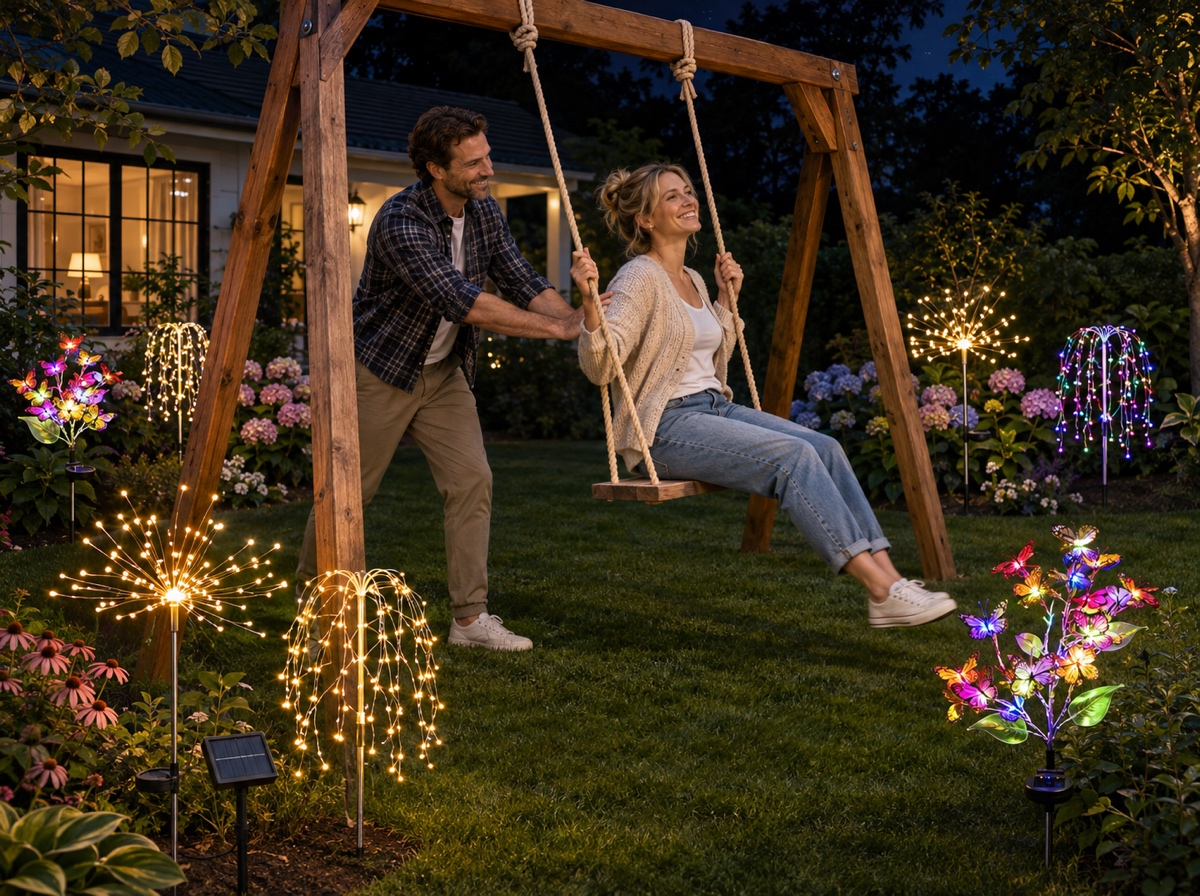
When you're looking at solar lights you need to start by defining the job. Where will the light be? What do you need to see? How long do you need it to run for? Then you look at the panel, the battery, the controls and the light spread all together. That gives you a proper specification for the suppliers and a sample to test.
Start With the Site and the Lighting Task
Just go to the site, get some photos and a basic layout before you commit to a model. Note the area (where you're going to mount it), any trees or buildings nearby and which way the panel will be facing. A great product photo is useless if the panel is going to be in shade the majority of afternoons.
Note the lighting requirements. A path may require a constant low level of light throughout the night. A security light may remain very dim until it detects movement. A worksite may require full brightness for the duration of a shift. All of these different scenarios have different demands on the battery.
· Think about what the people are doing. Are they looking for a route? Are they checking who's visiting? Are they using the tools? Are they moving vehicles? Clearly define the area that you're going to be lighting.
· Consider the charging conditions. Note the location, any seasonal shade, the panel orientation and how easy it is to clean. If you're after it to work all year round then you need to plan for the worst season.
· Record the operating schedule. Note when the light is running at full power, any dimming that's in place, how the sensors work and how many cloudy nights the system is expected to cope with.
· Check the installation constraints. How high can you mount the light? What surfaces are available? Where can the cables go? What's the wind like in the area? How easy is it to get to the battery or controller for servicing?
Match the Solar Light to the Application
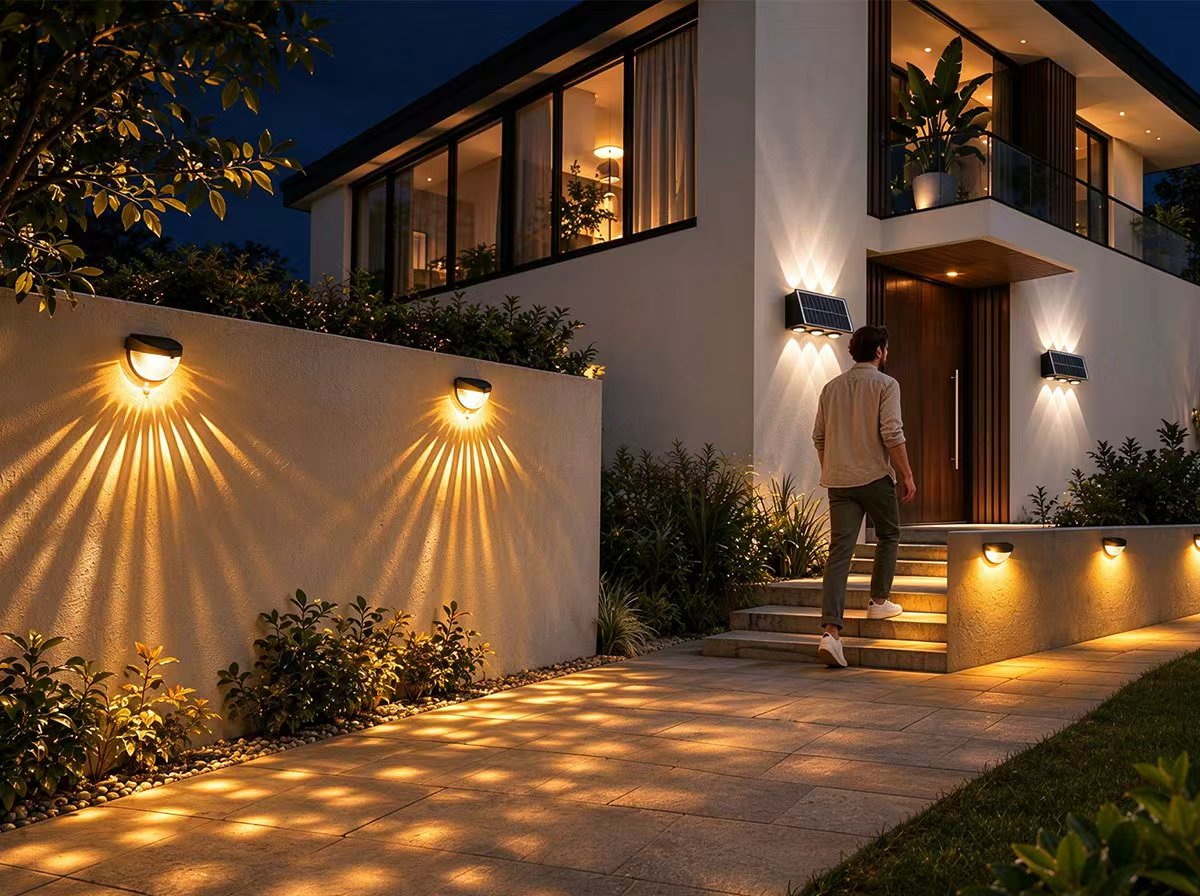
Different sites may well be using the same type of product, but they may well have different aiming requirements, different controls or different energy backup. Use the specific application to narrow your choice down and then check the model at the actual mounting site.
Table 1. Solar light priorities by application
Path and garden | Comfortable route lighting | Spacing, fixing and shade | Coverage, glare and duration |
Wall and security | Detection and visibility | Height and detection zone | Sensor response and hold time |
Yard and flood | Useful area coverage | Aiming and panel access | Dark patches and boundary spill |
Road and park | Suitable distribution | Traffic, poles and spacing | Uniformity and glare |
Worksite | Task visibility | Placement and shift length | Stability and sustained light |
Camping and off-grid | Portable area lighting | Charging access and storage | Low modes and handling |
In the industrial park look at the gate, the loading area, the parking areas and the walkways in turn. Each of those areas will have different levels of activity and different hours of activity. The layout should show which light covers which area so you can identify any gaps prior to ordering.
Road lighting will need to be designed for the site in question. Road width, traffic, pole shape, spacing and adjacent lighting all have an impact. Worksites will also need to ensure their lighting complies with local regulations. Knowing the product wattage is of course no guarantee that it will be a suitable product.
Calculate the Energy the Light Will Use Each Night
The lighting schedule ties the job in with the electrical system. To work out the energy consumption on a nightly basis you simply multiply the power used in each mode by the duration of that mode. Remember to include the controller and sensor in your total system power figure. On the example given, a system drawing 6 watts for 4 hours and 2 watts for 6 hours would use 36 watt-hours during that schedule. The supplier will of course still have to allow for conversion losses, discharge limits and the reserve required for the worst case of poor charging days. Those assumptions should be stated alongside the calculation.
For lights with motion sensors, find out how the runtime is affected if the sensor is being triggered all the time. Testing in a quiet area will likely consume less energy than at a high traffic entrance. Agree on a sensible trigger pattern and use that for both your testing and when you're comparing the quotes.
Compare Battery Energy on the Same Basis
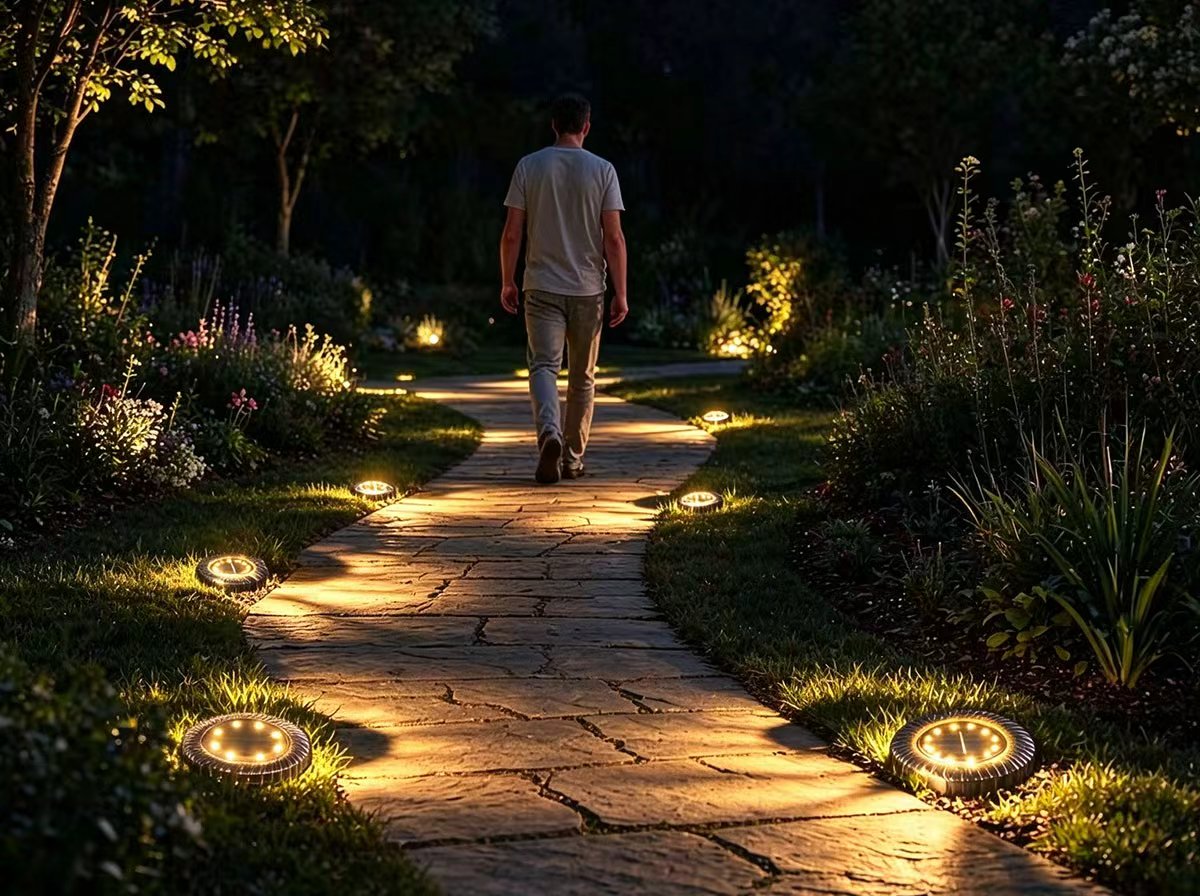
Battery capacity in Ah only makes sense if you know the voltage. To get to Wh you simply multiply the voltage by the Ah. Then you have to ask how much of that Wh the system can actually use before the controller kicks in and stops it from discharging too much.
Temperature, battery chemistry, aging, usable energy all depend on temperature, battery type, age and controller losses. Find out what the battery cell type is, what the protection setup is, what the charge limits are and what temperature range is used. If maintenance is an issue then find out how the battery is replaced and whether the enclosure can be re-sealed after charge. Ask about the operating mode, ambient temperature and end threshold. The light may continue to glow even after the output has dropped below what the installation requires. Get an output over time record so you can see when the dimming occurs and how much useful light is actually being delivered.
Match the required backup time to the nightly schedule. If you're looking at having extra reserve for several cloudy days then the battery has to be able to do that and the panel has to recharge it later. If you make one part bigger without looking at the other then it could take longer to recover.
Size the Solar Panel for Local Charging Conditions
Panel wattage is measured in the lab under defined conditions. To work out your daily charge you need to take into account the local irradiance, the orientation of the panel (which way it faces), any shading, temperature and system losses. If you're looking at the system to be able to run year round you'll want to check the monthly conditions as well. Tools such as NREL's PVWatts and the European Commission's PVGIS can be used to assess the solar resource. Ask the supplier how that data is used in the integrated light's energy estimate (PVWatts, PVGIS).
Check the recovery case as well (not just a fully charged night) but how the system recovers after several cloudy days. Can the panel cope with the load of the following night and recharge the battery during the available sunlight? Ask for the assumed charging hours and losses and test it in actual conditions. Installation details can make a difference. An integrated panel will follow the angle of the lamp, a separate panel may actually get more sun. Check the actual cable run and the mounting hardware for your particular installation and make sure you can get to it for cleaning and servicing. Delivered Performance.
A useful quote will tie in every claim. A good quote will link every claim to the precise setup that is being offered. Use these checks to compare offers and to spot any missing information and evidence.
Battery | Usable Wh, chemistry and temperature basis | Cell identity and discharge limits |
Runtime | Output mode, schedule and end threshold | Output curve and test conditions |
Panel | Rated watts and site energy yield | Orientation, shading and loss assumptions |
Light | Distribution at the installed position | Model-linked photometric results |
Enclosure | Ingress protection for the complete assembly | Report, tested model and conditions |
Controls | Dimming, timing and motion behavior | Approved settings and sample results |
Compare the cost of doing the same lighting job. A lower price may well mean a simpler package or fewer extras, but it could also mean a different battery, panel or schedule. Ask the supplier to highlight these differences so you can properly compare actual performance. Controls and Glare: Where the light will be used.
Controls will have an effect on both energy consumption and on the way the light is experienced. Check the sensor area, response time, how long it stays on, dimming steps and how it returns to normal. Check what happens when the battery is low and whether the settings are retained after a power cycle. In the case of hs and campsites, look at the light from a seated position and from the angle that people will be approaching it. At entrances and in yards look at the edges of the lit area. Adjust the aim and shielding to minimise glare and light spilling into adjacent areas, without compromising the visibility of the task at hand.
DarkSky's lighting principles provide a practical benchmark for directing light where it's required and for controlling its level and duration (Responsible outdoor lighting).
Verify Protection and Market Documents
Ensure the enclosure is properly protected for your site. Get the IP rating and a full report which will contain the tested model, how it was constructed, the lab, the date and the results. Make sure the housing, seals, cable entries and covers you end up with are the same as those that were tested.
An ingress report will cover water and dust tests. If you're concerned about impact, corrosion, temperature or mounting stability in the environment you're using it in then you'll need to look at those separately. They're particularly important for open yards, coastal locations and products that are going to be moved around a lot.
IEC 60529 provides the enclosure classification. Optical and electrical test results should also identify the model and operating mode (IEC 60529, LED lighting testing).
Market requirements will vary according to destination and product configuration. Find out from the supplier which conformity documents are required and check the models and variants listed. For lithium batteries you'll need to obtain the relevant transport test summary and confirm the packing and documentation with the forwarder.
Keep the conformity and battery transport records with your order so that the importer and logistics team can check the same setup (EU CE marking guidance, UN battery transport testing).
Approve a Sample Against the Installation Brief
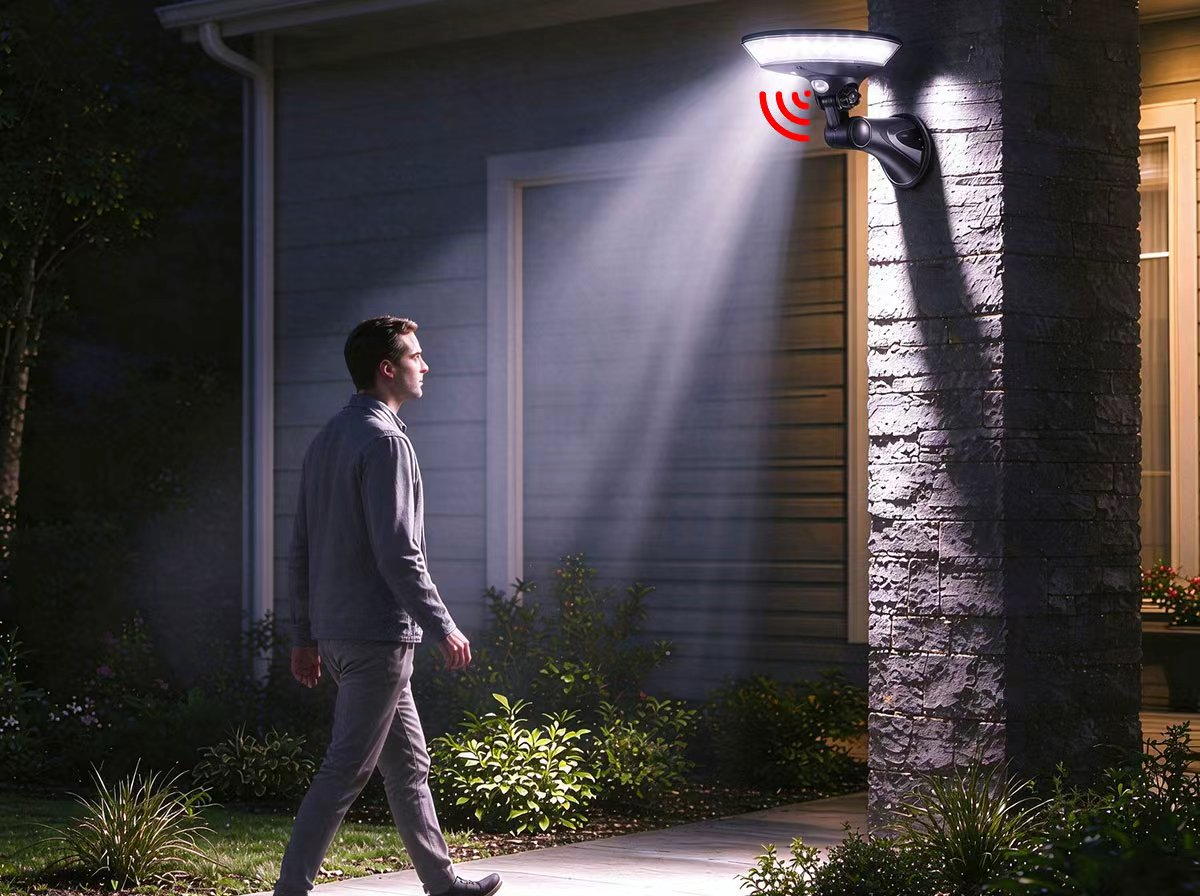
Use a sample that is representative of the intended production version (including battery, panel, controls, mounting hardware and accessories). Give it a sample code and a revision number. That makes any future changes much easier. Check the installed light. Measure its output on the surface you're trying to light and look out for any dark spots, glare or light spilling in places it shouldn't from a normal viewing angle. Check how the light performs through its sequence. Run it according to the planned lighting schedule and record any variations in output, its behaviour when the battery is low and the response of the sensors. Check how the system charges and recovers. Record the battery's starting state, the amount of sunlight it receives and its performance the following night under those conditions. All under stated conditions.
1. Check the whole product. Check how stable it is when mounted, how easy it is to service, the labels, the instructions, the packaging and how it tracks the sun. Write down what you consider to be a pass prior to commencing testing. If you need to alter anything on the sample then note which part or setting that was and re-do the checks for that part. Keep the approved sample, the written setup and the final artwork as your production references. Production references.
Confirm Order Terms With Lebote
Lobote's factory is Ningbo Lecho Electronics Co., Ltd. To get a quote on a solar light, please provide your application, site conditions, schedule, quantity and destination. Please also let us know of any branding and packaging requirements so that we can look at the configuration and commercial terms with you.
Min order quantities are between 100 and 1,000 units depending on the product and level of customisation. In stock orders generally ship in 7-10 days. Custom samples are usually ready around 30 days after we've confirmed your requirements. For your order you'll need to request the start date, sample milestones and production schedule.
Make sure you confirm in writing the sample fees, tooling, packaging, delivery terms, payment milestones and inspection arrangements. You need to confirm the warranty, the availability of replacement parts, what constitutes claim evidence and what the available remedies are. When you're looking at the total cost of ownership be sure to include freight, inspection and the expected level of maintenance.
Frequently Asked Questions
Q: Can I use one solar light model across multiple sites?
You can use the same model actually, just check each site's shade, mounting angle, lighting requirements and schedule. Go with the setup that will work in the worst possible conditions or else select different settings and hardware for each site.
Q: Is a bigger battery worth the extra cost?
A bigger battery can be worthwhile if you need more backup. You have to make sure the panel can recharge the battery and cope with the nightly load. You need to look at the usable watt-hours and the recovery time in the context of your site's actual charging conditions.
Q: Will a higher wattage panel fix the short runtime?
A: Start with shade, the panel orientation, the condition of the battery and how the system is actually used. A larger panel will help with the charging of course but you have to make sure the controller and battery can cope with it. Test the whole system once you've made the changes.
Q: What should a buyer do in the case of an all night runtime claim?
A: Get the mode schedule and the output curve (including any dimming). Work out what your minimum useful light level is for the site and see how long the sample will maintain that level under real conditions.
Q: What proves that the model in question satisfies its IP claim?
A: A report should specify the full assembly tested and the test conditions. It should list the model, the seals, the covers, the cable entries and so on to ensure they match your sample. If the construction is different you'll need to go back and re-assess the claim.
How to Choose Solar Lights for Different Applications?
Send your site and product details over to Ningbo Lecho Electronics Co., Ltd to discuss which of their solar lights would be appropriate for your application. Request a quote for the model you're interested in, a sample and the relevant documentation. Once you've reviewed the lighting performance, the charging characteristics and the order terms you'll be dealing with, you can then go ahead and place your bulk order.