Best Headlamps for Hunters Balancing Brightness and Stealth
Best Headlamps for Hunters Balancing Brightness and Stealth
Ask ten hunters what headlamp they use and you'll usually get ten different answers, along with at least one story about a light that died halfway through a pre-dawn hike to the stand. That's not a coincidence. Hunting puts a headlamp through demands that hiking or camping never do — you need enough output to navigate rough terrain in total darkness, but too much light, thrown too wide, and you've announced yourself to every animal within a hundred yards. Getting this balance right is less about buying the brightest thing on the shelf and more about understanding how light, distance, and animal behavior actually interact in the dark.
Why Headlamp Choice Matters More for Hunters Than Almost Anyone Else
There's also a practical timing issue. Most legal hunting hours begin around civil twilight and end at sunset, which means the walk in and the walk out both happen in low light or darkness. That's exactly the window where headlamp choice does the most damage or the most good.
What Actually Makes a Beam "Stealthy"
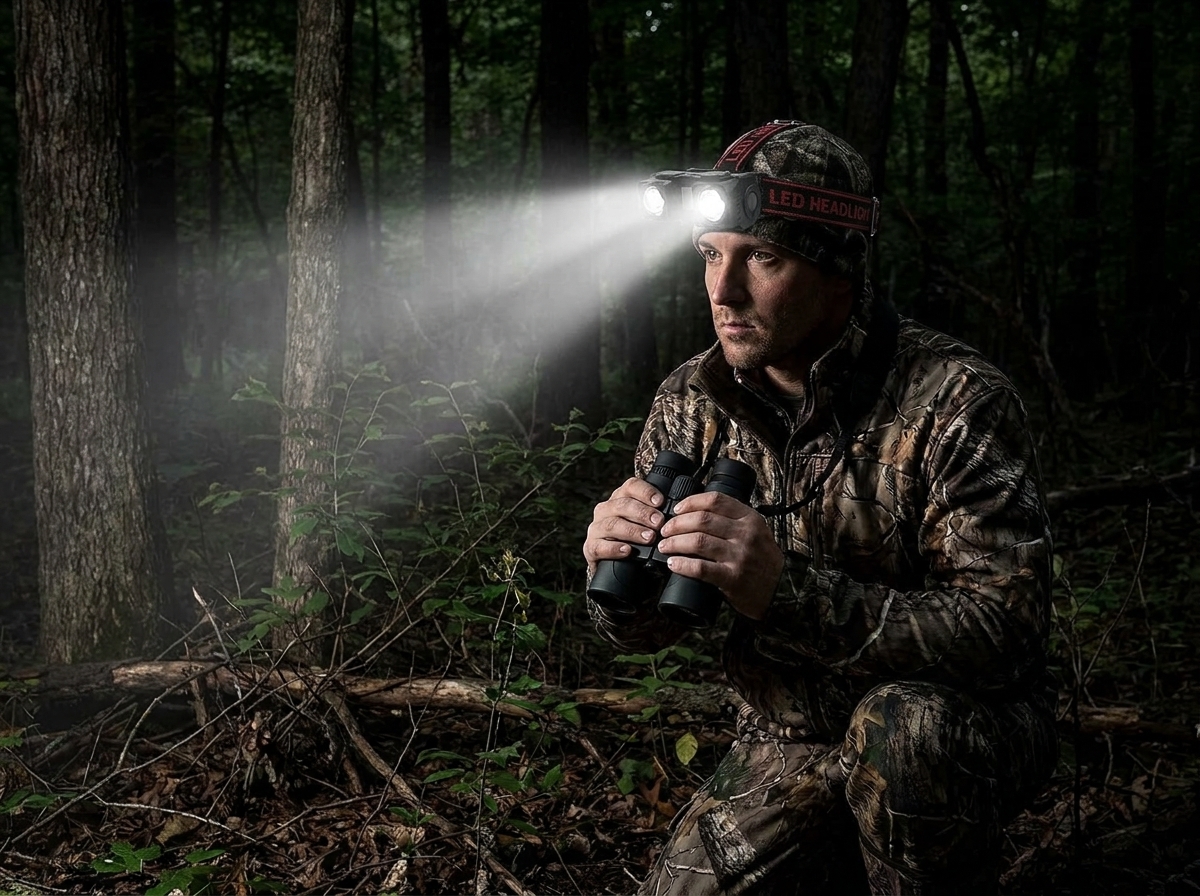
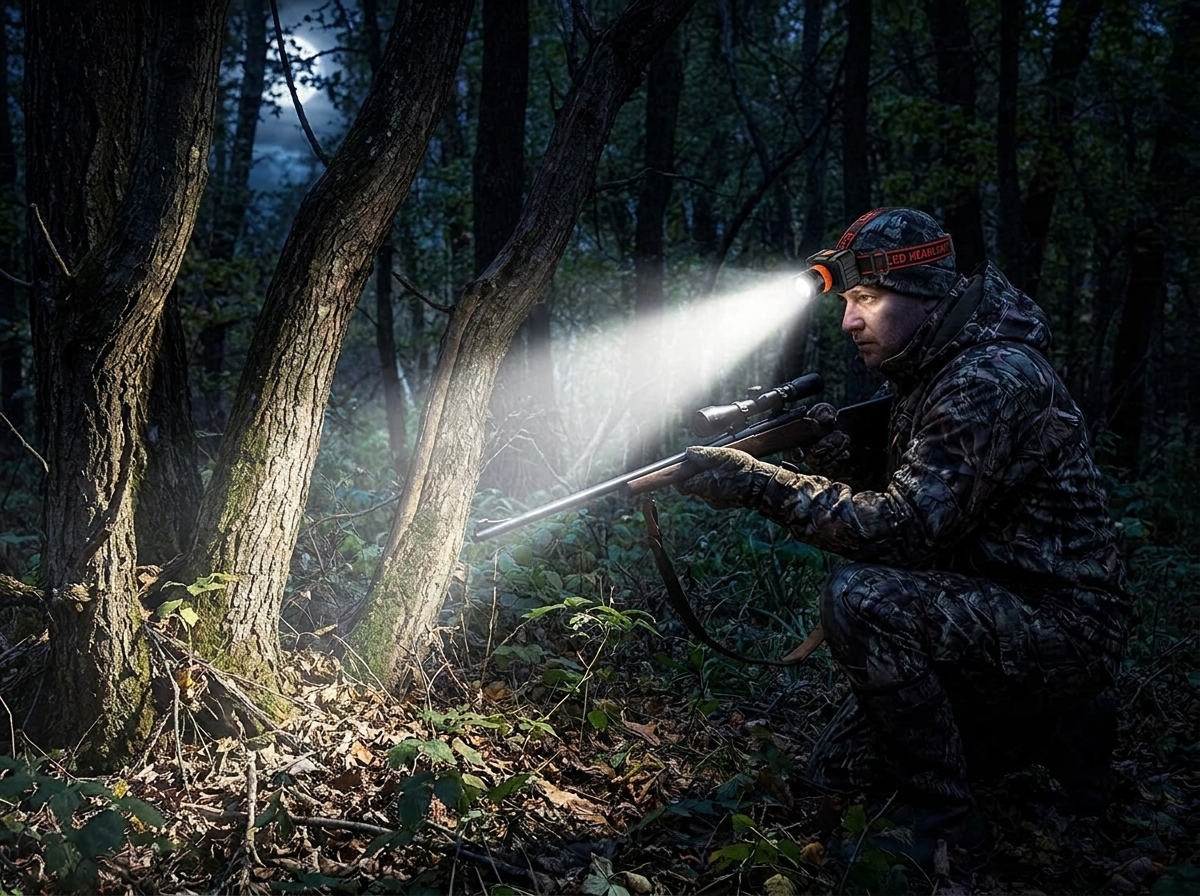
Stealth lighting isn't really about a single magic feature — it's a combination of output level, beam shape, and how disciplined you are about switching between them. A wide flood beam on full brightness throws light in every direction, including straight up into the tree canopy where it's visible from a long way off. A tighter, lower-output beam pointed close to the ground does the job of finding your footing without lighting up the whole hillside. The most useful headlamps for hunting give you real control over both of these variables, not just an on/off switch and one brightness level.
|
Aspect |
High-Output Flood Mode |
Low-Output Beam |
|
Visible distance |
Very high — easily seen across open ground |
Much lower, harder to spot at range |
|
Visible distance |
Very high — easily seen across open ground |
Much lower, harder to spot at range |
|
Best use case |
Trail navigation, gear checks before dawn |
Final approach, stand setup, close-range tasks |
|
Battery drain |
Higher on bright settings |
Lower, longer runtime per charge |
|
Risk to a hunt |
Can spook game well before you're in position |
Minimal disturbance when used correctly |
Timing the Light to the Animal, Not the Other Way Around
Most whitetail hunters already know deer move most in the hour or two around sunrise and sunset. What's less obvious is how that pattern should shape headlamp use. Research tracked by the National Deer Association shows deer covering more than twice the ground at dawn and dusk compared to full daylight — the exact window when a hunter is either walking to the stand in the dark or climbing down after last light. That overlap is precisely why a bright, wide beam at 5:45 AM can undo a week of scouting in about four seconds.
A practical rule that a lot of experienced hunters follow: full brightness only while you're still far from the stand and moving on a known trail, the lowest usable setting for the last stretch, and that same low setting for any fumbling around once you're set up. It sounds simple, but it's the single biggest behavioral fix most hunters could make.
Know the Legal Limits Before You Click It On
Artificial light and hunting have a complicated legal relationship, and it varies a lot by state and by species. Many states prohibit using a spotlight or any artificial light to locate or take game after dark — often called "spotlighting" or "jacklighting" — because it violates fair-chase principles and creates real safety risks around firearms. According to legal analysis of these statutes, the line usually comes down to intent and equipment in hand: simply walking with a headlamp to reach or leave a stand is normally fine, but sweeping a bright beam across a field looking for eye-shine while carrying a firearm can cross into illegal territory fast, even outside hunting hours. Rules differ enough between states and even counties that it's worth a quick check with the local wildlife agency before a trip, especially if hunting somewhere unfamiliar.
What to Actually Look For in a Hunting Headlamp
Once the legal and behavioral pieces are out of the way, the buying decision comes down to a shorter list than most product pages suggest:
- Multiple brightness levels, including a genuinely dim setting. A headlamp that only offers "high" and "off" is useless for stand work. The more granular the steps, the easier it is to match output to the task.
- A beam you can narrow or adjust. Zoom or focus-adjustable optics let you switch between a wide flood for the walk in and a tighter, lower-glow beam for close work near the stand.
- Silent, tactile controls. A loud click or a beep on power-up is a small thing that has ruined more than one morning sit. Soft-touch or twist controls are worth paying for.
- Runtime that covers a full sit, not just a walk-in. Rechargeable lithium batteries with Type-C charging are now the standard, but check the runtime at the brightness you'll actually use, not the rated maximum.
- Weight and fit for hours of stillness. A light that's fine for a 20-minute jog can feel very different after four hours motionless in a treestand — padded straps and a low front-heavy profile matter more than they seem to at first.
- Weather sealing. Early-season hunts mean humidity and dew; late-season hunts mean snow and freezing rain. An IPX4 rating or better avoids a dead light at the worst possible moment.
- A locking or accidental-activation-proof switch. Few things are worse than reaching into a pack before daylight and finding the light has been running since the drive out. A travel lock or recessed switch prevents that particular headache.
|
Hunting Scenario |
Recommended Beam Type |
Suggested Output |
|
Pre-dawn hike to stand on a known trail |
Wide flood beam |
Medium-to-high brightness |
|
Final 50–100 yards to the stand |
Narrow, focused beam |
Lowest usable setting |
|
Setting up gear, checking a release or rangefinder |
Close-range task light |
Low-to-medium brightness |
|
Field dressing or blood trail after dark |
Wide flood beam |
High brightness |
|
Emergency signaling |
Strobe if available |
Maximum output |
Building a Practical Hunting Headlamp Toolkit
LEBOTE's headlamp range covers most of the scenarios above without forcing a hunter to compromise on any one of them:
- The hunting headlamp is built around exactly this use case, with a powerful main beam for the walk in and multiple output modes that make it easy to drop down to a low-glow setting once you're near the stand.
- The zoom sensor headlamp offers six brightness levels and a zoomable, focus-adjustable beam, giving fine control between a full-power flood and a tighter, lower-glow spot — useful for hunters who also fish or run trail cameras after dark.
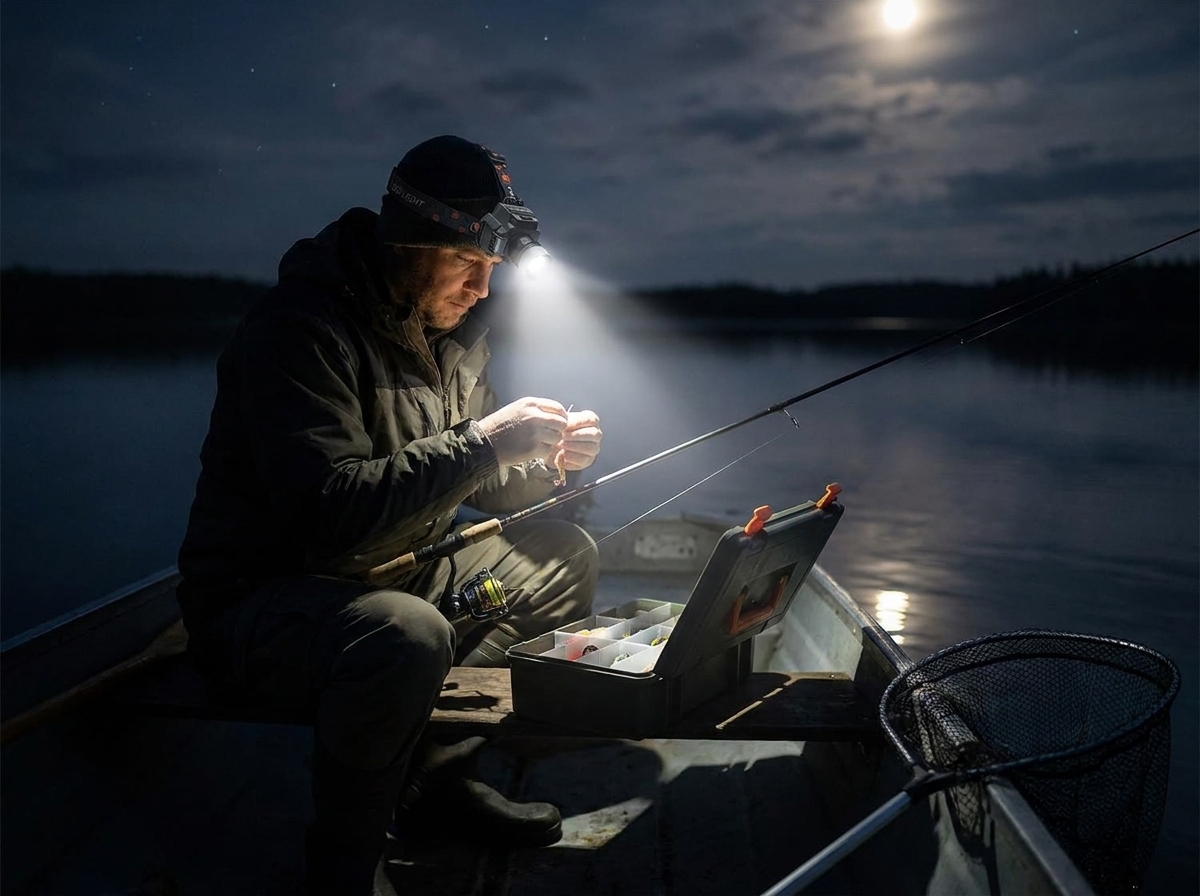
- The fishing headlight packs multiple brightness levels and Type-C charging into a compact housing, a lighter backup option for hunters who want a spare light in the pack.
- The zoom sensor headlight adds telescopic focusing and a larger battery, which suits scouting trips or blood-trailing situations where extended runtime and beam reach matter more than a low profile.
-
The full headlamp collection includes several additional models with adjustable output and patrol-style warning functions, useful for distributors sourcing a broader outdoor and hunting-adjacent lineup rather than a single SKU.
Headlamp or Handheld — Does It Matter for a Treestand Hunt?
A fair number of hunters still default to a handheld flashlight out of habit, usually the same one that lives in a truck glovebox. It works, but a headlamp has a real edge for this specific job. Climbing into a stand in the dark means at least one hand on a ladder rung or a rope, and a beam that moves with your eyes instead of your fist makes checking footing, gear straps, and the ground below noticeably easier. This isn't a minor convenience — research on tree stand fall injuries has found that falls disproportionately happen in the evening and specifically while descending, which is exactly when fatigue, low light, and one occupied hand tend to line up. The tradeoff with any headlamp is that it sits closer to eye level, so a poorly shielded model can bounce more stray light around than a handheld would — one more reason the quality of the beam shroud and the presence of a genuine low setting matter as much as the lumen figure on the box.Some hunters carry both: a headlamp for hands-free movement and setup, plus a small handheld or a magnetic clip light as backup. It's not overkill so much as cheap redundancy — a spare light source weighs almost nothing and solves the one failure mode (a dead or dropped primary light) that can actually end a hunt early.
A Few Mistakes Worth Avoiding
Even experienced hunters trip up on a handful of avoidable habits. Testing a new headlamp for the first time on opening morning is a common one — batteries, strap fit, and mode-switching all deserve a dry run at home first. Leaving the light on its brightest setting by default is another; a lot of headlamps power on in their last-used mode, so it's worth deliberately dialing back to a low setting before a hunt rather than assuming it'll remember. And packing only one light source is a risk not worth taking on a solo hunt in unfamiliar terrain — a small backup, even a basic clip-on, is cheap insurance against a dead battery two miles from the truck.
Gear Up for Your Next Hunt with LEBOTE
LEBOTE manufactures rechargeable headlamps built for hunters, anglers, and anyone who needs reliable light without giving away their position. Our lineup includes multi-level brightness control, zoomable and focus-adjustable beams, Type-C fast charging, and durable weatherproof housings suited to early-morning stand hikes and late-night blood trails alike. Whether you're outfitting your own hunting kit or sourcing a headlamp line for retail or private-label distribution, our team can match the right specs, MOQs, and certifications to your market. Reach out for samples or a wholesale quote.
Top 9 Camping Light Manufacturers in China
Work Lights for Warehouse and Night-Shift Logistics Teams