Who Are the Leading Camping Lantern Manufacturers in 2026

Search this question and you'll mostly get "best of" roundups written by gear reviewers who tested five or six retail products and ranked them by lumens and price. That's useful if you're buying one lantern for a weekend trip. It's close to useless if you're a distributor, a retailer building a private-label line, or a buyer trying to figure out where a product on a marketplace listing actually comes from. Those are two very different questions, and this guide is aimed at the second one.
How One Factory Ends Up Behind a Dozen Different Brands
That's not necessarily a problem. A distributor who wants a fast, low-risk product launch can lean into this and order an existing mold with private-label packaging, skipping tooling costs entirely. A brand that wants genuine differentiation needs to go a step further and request housing or feature changes that a reseller model can't offer, which is really the dividing line between the second and third producer categories above.
Common Mistakes Buyers Make Sourcing Camping Lanterns
A few patterns show up often enough in lantern sourcing specifically that they're worth flagging on their own:
- Treating lumens as the only spec that matters. A 1,000-lumen lantern that dims noticeably after 90 minutes is a worse product than a 300-lumen one that holds steady for six hours. Runtime at a stated brightness matters more than the peak number on the box.
- Skipping battery documentation because "it's just a lantern." Any lithium-powered product shipped internationally needs UN38.3 paperwork regardless of category, and customs holds over missing battery documentation are more common than most first-time importers expect.
- Assuming IPX ratings are interchangeable. An IPX4 splash-resistant lantern and an IP67 submersible one serve very different use cases, and the gap in actual protection between them is larger than the numbers might suggest at a glance.
- Not asking whether the mold is shared with other buyers. If a distinct look matters to the brand, this is worth confirming upfront rather than discovering after launch that a competitor is selling the same shell.
-
Battery Capacity and Runtime: What the Numbers Actually Mean
Runtime claims on a spec sheet are usually measured at a specific brightness setting, and that detail tends to get lost in translation between the factory and the final product listing. A lantern rated for "40 hours" almost always means 40 hours on its lowest setting, not its brightest. When comparing quotes across suppliers, it's worth asking for runtime figures at both the highest and lowest brightness modes, along with the battery's actual mAh capacity, rather than accepting a single headline number. This becomes especially relevant for private-label buyers writing their own product listing copy, since an inflated or ambiguous runtime claim is one of the more common sources of negative reviews after launch.
Why a Single Ranked List Doesn't Really Work Here
Camping lanterns sit in an unusually crowded corner of the outdoor gear market. A single factory in Zhejiang or Guangdong might produce private-label lanterns for a dozen different Amazon storefronts, an outdoor retail chain, and a hardware brand, all from the same handful of tooling molds. Meanwhile, a handful of established outdoor brands design their own products and outsource manufacturing to a rotating set of contract factories. Squeezing all of that into one ranked list flattens a genuinely fragmented supply chain into something that looks tidier than it actually is. A more useful starting point is understanding the categories these producers fall into, and what each one is actually good for.
Three Categories Worth Knowing
Almost every camping lantern on the market traces back to one of three kinds of producer:
- Established outdoor and consumer brands. Companies like Coleman, Goal Zero, and Black Diamond design and market their own lantern lines, typically outsourcing actual production to contract manufacturers while keeping tight control over branding, retail distribution, and after-sales support. Their products carry a brand premium and are built primarily for retail shelves and direct-to-consumer sales.
- Then there are the Chinese OEM and ODM factories that actually build a large share of the lanterns sold under both branded and private labels. These factories own the tooling, run the production lines, and offer customization on housings, packaging, and light-source configuration for buyers who want to build their own product line rather than resell an existing one.
- Private-label resellers and small assemblers. These businesses buy generic components or finished units from a factory, slap on packaging and a brand name, and sell through marketplaces with minimal quality oversight. Some are perfectly fine. Others are the source of a lot of the inconsistent quality that shows up in marketplace reviews.
Producer Type
Customization
Typical Buyer Fit
Established outdoor brands
Little to none for outside buyers
Consumers buying retail, not B2B sourcing
Chinese OEM/ODM factories
Housing, packaging, light source, MOQ-dependent
Distributors and private-label brands
Private-label resellers
Usually limited to branding only
Small trial orders, quick market tests
Certifications and Safety Standards That Actually Separate the Serious Producers
Because most camping lanterns run on rechargeable lithium batteries, the certification picture is a bit more layered than it is for a simple flashlight. Beyond the usual CE and RoHS marks for the electronics themselves, any lithium battery shipped internationally, whether by air, sea, or road, needs to pass UN/DOT 38.3 transport testing, which puts the battery through altitude, thermal, vibration, and short-circuit testing to confirm it won't fail dangerously in transit. A factory that can't produce a UN38.3 test report for its battery cells is a factory you probably shouldn't be shipping lithium-powered products from. Water and dust resistance, meanwhile, should be verified against IEC 60529, the standard that defines what an IPX4 or IP65 rating actually means in tested conditions rather than in marketing copy.
Certification / Standard
What It Covers
Why It Matters for Lanterns
CE + RoHS
Restricts hazardous substances, EU electronics compliance
Baseline requirement for EU-bound shipments
UN/DOT 38.3
Transport safety testing for lithium battery cells
Required for air, sea, and road shipping of the battery
IEC 60529 (IP rating)
Dust and water ingress protection
Confirms outdoor durability claims are lab-tested
FCC
Electromagnetic interference compliance
Required for import and sale in the US
What Buyers Actually Care About Beyond the Spec Sheet
According to REI's own guide to choosing a lantern, the practical decision usually comes down to power source, brightness, weight, and a handful of features that matter more in practice than on paper. For sourcing purposes, a few of these are worth building into a spec sheet before requesting quotes: - Multiple brightness settings rather than a single output level, since most camping use is closer to ambient lighting than a full-brightness flashlight beam.
- A hanging hook or built-in loop — small detail, but it's one of the most-cited usability features in lantern reviews, and cheap to build into a mold from the start.
- USB or Type-C output for device charging. Larger-capacity lanterns increasingly double as a small power bank, which is a meaningful differentiator for camping and emergency-prep buyers alike.
- An IPX4 rating or better, since lanterns spend more time exposed to rain, dew, and dust than a handheld flashlight typically does.
- Collapsible or foldable housings for backpacking-oriented product lines, where packed size matters as much as lumens.
- Solar charging as an add-on, not a replacement for USB charging — useful for extended trips, but rarely fast enough to be the primary power source.
-
Matching Lantern Type to the Buyer's Actual Use Case
Not every camping lantern needs the same spec sheet. A product line built for car camping has different priorities than one built for backpacking or emergency preparedness:
Use Case
Priority Features
Less Important
Car camping / RV
High lumens, longer runtime, larger battery
Weight and packed size
Backpacking
Compact and collapsible, low weight, decent runtime
Peak brightness
Emergency preparedness kits
Long shelf life, USB power bank function, hand-crank backup
Aesthetic finish
Retail gift / lifestyle line
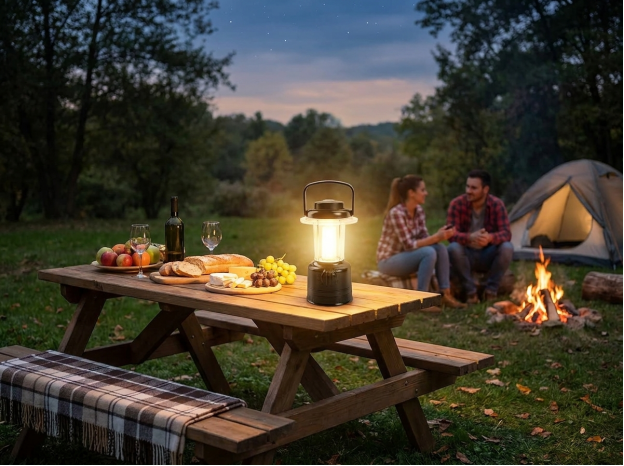
Design, color options, ambient light modes
Maximum lumens
Vetting a Camping Lantern Producer Before You Order
The due diligence process here overlaps heavily with sourcing any other rechargeable lighting product: confirming factory ownership rather than a reseller layer, requesting real test reports instead of a claimed certification, and getting MOQ and tooling costs in writing before committing to a design. Our B2B sourcing guide to mobile lighting manufacturers in China walks through this same comparison across ten suppliers, including several that produce camping lanterns alongside flashlights and work lights, and is a reasonable template for running the same checks against your own shortlist. For lanterns specifically, add battery test documentation and IP rating verification to that checklist, since both matter more here than they do for a simple handheld light.
Where LEBOTE Fits in This Landscape
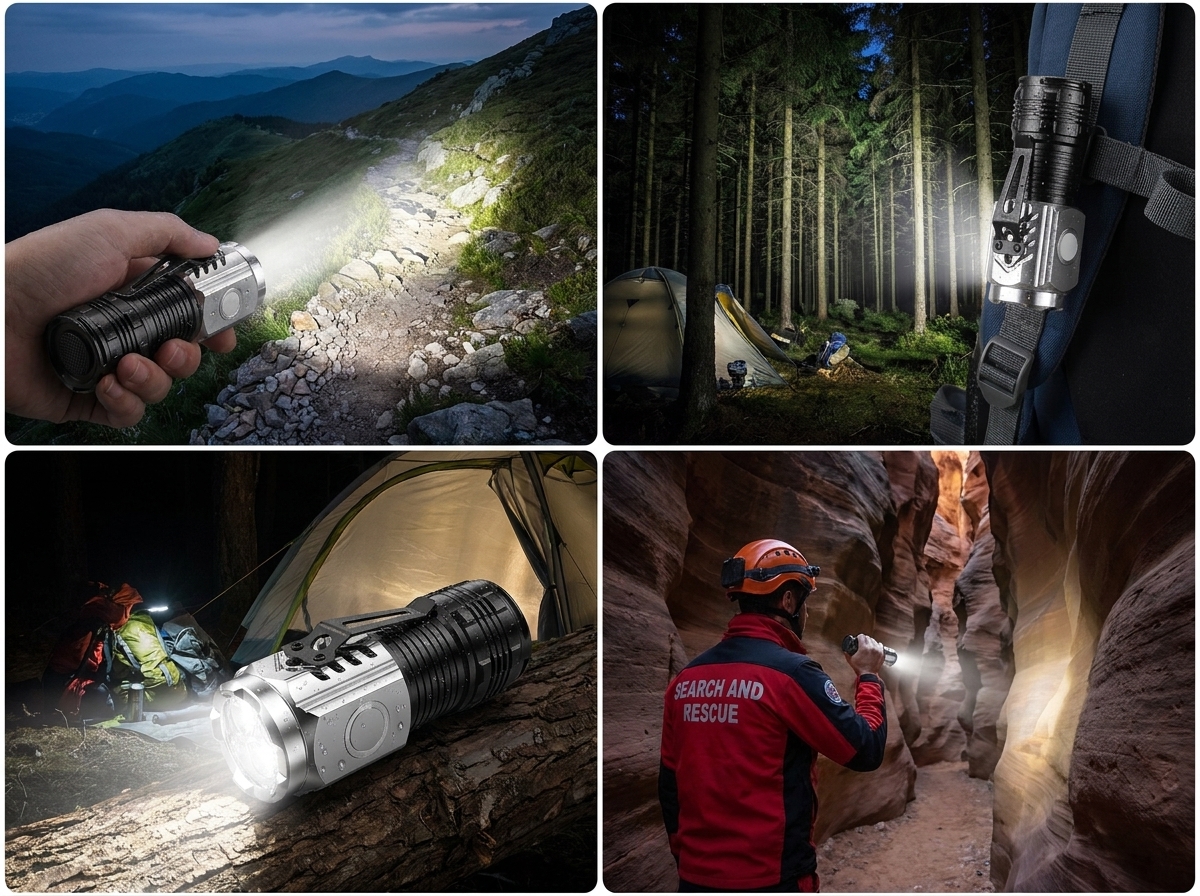
LEBOTE falls into the second category above: a factory-direct manufacturer rather than a brand or a reseller. Operating from Ningbo, Zhejiang since 2010 with more than 200 employees, the factory produces camping lanterns alongside flashlights, headlamps, and work lights, with products tested to CE, RoHS, and FCC requirements before shipment. The lantern lineup includes solar-charging and folding models built for backpacking-oriented product lines, plus retro-style tent lanterns aimed at the ambient lighting segment REI's guide points to for lifestyle-driven buyers. OEM and ODM support covers custom housings, private-label packaging, and light-source configuration for distributors building their own line rather than reselling an existing catalog.
None of this diligence is unique to camping lanterns, but the category does add one extra variable that flashlights and headlamps mostly avoid: a much wider range of buyer profiles landing on the same product page, from a solo backpacker comparing weight in grams to a retail buyer placing a five-figure private-label order. A producer that can serve both without cutting corners for either is a reasonable proxy for the kind of "leading" status this guide set out to define, even if no single ranked list can fairly capture it.
Source Camping Lanterns From a Factory-Direct Producer
LEBOTE manufactures rechargeable camping lanterns, flashlights, headlamps, and work lights from its own factory in Ningbo, Zhejiang, with CE, RoHS, and FCC test reports available on request and UN38.3-compliant battery documentation for international shipping. The team supports OEM and ODM projects, including custom housings, packaging, and light-source options, with MOQs suited to trial orders and recurring bulk purchases alike. Buyers can browse the camping light range directly and reach out with target specs, order volume, and destination market for a formal quote.
How to Choose a Reliable Flashlight Manufacturer in China