How to Contact a Headlamp Factory for Bulk Orders
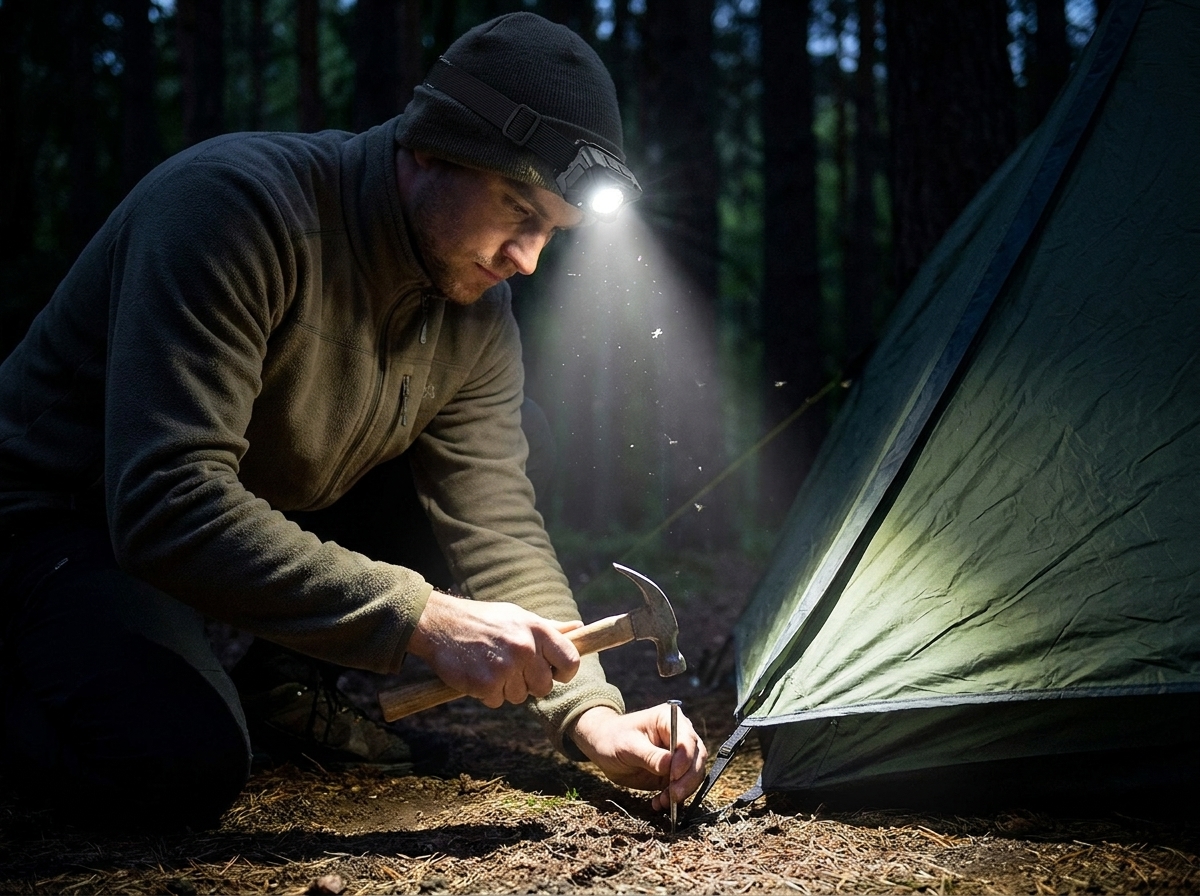
Sourcing headlamps at scale is a different exercise than buying a handful of units off a marketplace listing. Once an order moves into container-load territory, the questions change. Can the factory hold tolerance on lumen output across five thousand units? Will the battery pass moisture testing after a month at sea? Who actually answers when a shipment is running three weeks behind schedule? Getting a factory relationship right from the very first email saves months of back-and-forth later, and it starts with knowing who to contact, what to ask, and how to read the answers you get back.
This article walks through the process step by step: defining specifications, shortlisting real manufacturers, checking certifications, choosing a contact channel, and negotiating terms that hold up once production actually starts.
Why Bulk Buyers Need a Direct Factory Relationship
Working through a trading company or a general reseller can feel easier at the start, but it adds a layer between you and the people who actually control quality, cost, and lead time. A direct line to the manufacturer typically gives bulk buyers:
- Pricing transparency — factory-direct quotes strip out reseller margin, which matters once volume climbs into the thousands of units.
- Faster technical answers, since questions about LED bin consistency, PCB sourcing, or cell brand go straight to engineering rather than being relayed through a middleman.
- More room to negotiate customization — logo printing, packaging redesign, and mold-level changes are usually only on the table when you're talking to the factory itself.
- Clearer accountability if a batch arrives with a defect rate above the agreed AQL, since a contract with the manufacturer is easier to enforce than one routed through an intermediary.
None of this makes every reseller relationship a bad one. For a buyer testing a new market with a five-hundred-unit trial order, a trading company can be a reasonable stepping stone. But for anyone planning recurring bulk purchases, going direct to the factory is almost always worth the extra sourcing effort.
Step 1: Define Your Specifications Before You Reach Out
Factories respond faster, and quote more accurately, when the first message already contains real numbers instead of a vague request for “headlamps for my store.” Before drafting an inquiry, pin down the target lumen output, battery type (built-in rechargeable versus replaceable AA/AAA cells), waterproof rating, intended use case, and target retail price band.
The table below maps common end uses to typical spec ranges — a useful starting reference if you're not yet sure which numbers to ask for.
|
Use Case |
Typical Lumen Range |
Battery Type |
Waterproof Rating |
Key Buyer Priority |
|
Camping & hiking retail |
200–500 lm |
Built-in rechargeable, USB-C |
IPX4–IPX6 |
Light weight, runtime |
|
Industrial / hard-hat work |
300–800 lm |
Rechargeable, power display |
IPX5+ |
Impact resistance, warning light |
|
Hunting & fishing |
300–1000 lm |
Rechargeable or dual-power |
IPX6 |
Long beam throw, colour filters |
|
Search, rescue & patrol |
500–1000+ lm |
High-capacity rechargeable |
IPX6–IPX7 |
Multi-mode output, durability |
|
Reading & everyday carry |
100–300 lm |
Rechargeable, compact |
IPX4 |
Low weight, adjustable beam angle |
It's worth checking an existing headlamp product range before writing a spec sheet from scratch — comparing your target output and battery format against models already in production is often faster than starting from a blank page.
Step 2: Identify and Shortlist Real Manufacturers
Once specifications are clear, the next task is separating genuine factories from trading companies posing as manufacturers. A few practical approaches:
- B2B marketplaces such as Alibaba and Made-in-China let you filter by verified supplier status and years in business, though the badge alone is not proof of manufacturing capability.
- Trade shows — the Canton Fair, Outdoor Retailer, and IWA OutdoorClassics among them — remain one of the most reliable ways to meet factory engineers face to face and see sample units firsthand.
- Ask directly for a business license, export track record, and a recent third-party factory audit report from an inspection body such as SGS or Bureau Veritas.
Regional manufacturing clusters are also worth knowing. Ninghai County in Ningbo, Zhejiang, is one of China's long-established mobile lighting hubs, home to factories with over a decade of export experience in headlamps, flashlights, and work lights — background that's useful context when you're comparing candidate suppliers by region.
Step 3: What to Confirm Before You Send the First Inquiry
A short list of questions, asked upfront, filters out suppliers who can't actually support a bulk program:
- What is the minimum order quantity per model, and does it flex for a mixed-SKU order?
- What does a pre-production sample cost, and what's the turnaround time?
- Does the factory support OEM branding, ODM design changes, or both?
- What is monthly production capacity for this product line, and is it currently free?
- What in-line and pre-shipment QC steps are standard, and can a third-party inspection be scheduled?
- What payment terms and methods are accepted, and what happens if a shipment is delayed?
Step 4: Certifications and Compliance to Verify
Certification claims printed on a product sheet aren't the same as certification documents you can actually check. Ask for the certificate numbers and the testing lab's name, and verify them independently rather than taking a packaging icon at face value.
For lumen, runtime, and beam-distance claims specifically, ask whether the factory tests to the ANSI/NEMA FL1 flashlight performance standard, which standardizes how output, runtime, impact resistance, and water resistance are measured so figures can be compared apples-to-apples across suppliers.
For shipments headed to the European Union, confirm CE marking is backed by a proper declaration of conformity — the U.S. government's guide to EU CE marking requirements is a useful plain-language reference for buyers unfamiliar with the process.
|
Destination Market |
Mark or Standard Expected |
What It Confirms |
|
European Union |
CE, RoHS |
Safety, EMC, and restricted-substance compliance |
|
United States |
FCC; UL a plus |
Electromagnetic compatibility, electrical safety |
|
Global / voluntary |
ANSI/NEMA FL1 |
Verified lumens, runtime, beam distance, durability |
|
Outdoor / industrial use |
IP rating (IPX4–IPX7) |
Dust and water ingress protection |
Step 5: Reach Out Through the Right Channel
Email remains the standard first touchpoint for most factories, since it creates a written record that both sides can reference later. WhatsApp is widely used for faster back-and-forth once contact is established, and marketplace messaging (Alibaba's built-in chat, for instance) works well for an initial scan of several suppliers at once.
A first message gets a faster, more useful reply when it includes:
- The product type and target specification (referencing the table above works well)
- Estimated order quantity, even if it's a range
- Target unit price or budget band, if you have one
- Destination port or country, and rough timeline
- Whether you need OEM branding, custom packaging, or private-label design
A sample opening line: “We're a lighting distributor in [region] looking to place a recurring order of 3,000–5,000 rechargeable headlamps, roughly 500 lumens, IPX5, with our logo printed on the housing. Could you share your MOQ, sample lead time, and FOB pricing for an order in this range?” Specific, quantified requests like this tend to get answered within a day; open-ended ones often sit in a queue.
A Sample Outreach Email
Buyers who aren't sure how to structure a first message can adapt the template below. It's deliberately short — factories handling dozens of inquiries a week tend to prioritize the ones that are easy to quote quickly.
Subject: Bulk Inquiry – Rechargeable Headlamps, 3,000–5,000 units
Hi [Name],
We distribute outdoor and safety gear in [region] and are planning a recurring order of rechargeable LED headlamps, roughly 500 lumens with IPX5 water resistance. Initial volume would be 3,000–5,000 units, shipping to [port], with our logo printed on the housing.
Could you share your MOQ, tiered FOB pricing for this range, sample cost and lead time, and which certifications (CE / RoHS / FCC) are already in place? Happy to jump on a call once we've reviewed your quote.
Thanks, [Your name / company]
A message this specific usually gets a real quote within a day or two. Vague inquiries — “please send catalog and price list” — tend to get a generic PDF back, which adds another round trip before anyone is talking about your actual order.
Vetting the Factory Before You Commit
Written answers only go so far. Before placing a deposit on a first bulk order, most experienced buyers also do at least one of the following: request a live video call walking through the production floor, ask for photos of the specific mold or tooling being used for your model, or book a third-party pre-shipment inspection for the finished batch rather than relying on the factory's own QC report alone.
None of these steps take long, and a factory confident in its own process rarely objects to any of them. Hesitation at this stage is itself useful information.
Step 6: Negotiate MOQ, Pricing Tiers, and Payment Terms
MOQ and pricing usually move together — a factory willing to waive its standard minimum for a trial order will often price it closer to retail than to volume-tier cost. It helps to ask for a tiered quote (for example, 500 / 2,000 / 5,000 units) in the first round, so the cost curve is visible before you commit to a volume.
|
Order Volume |
MOQ Flexibility |
Typical Payment Terms |
Typical Lead Time |
|
Trial (100–500 units) |
Some factories waive standard MOQ |
50% deposit, 50% before shipment |
15–20 days |
|
Standard bulk (1,000–5,000) |
Negotiable across mixed models |
30% deposit, 70% before shipment, or L/C |
25–35 days |
|
Large program (5,000+) |
Dedicated line often possible |
L/C at sight, or credit terms after track record |
35–45 days |
Before finalizing an order, agree on which Incoterms® 2020 rule governs the shipment. EXW, FOB, and CIF are the terms most commonly used for headlamp orders, and settling on one in writing removes ambiguity about who bears cost and risk at each stage of the journey — a detail that matters far more once a shipment actually runs into a delay.
Red Flags Worth Watching For
- Reluctance to share a business license, factory photos, or a live video walkthrough of the production line
- Refusal to allow a pre-shipment inspection by a third party of your choosing
- Pricing dramatically below the rest of the market with no clear explanation
- Vague or shifting answers about which lab issued a certification, or when it was tested
Bringing It Together
None of these steps are complicated on their own, but skipping any one of them tends to surface as a problem later — usually after the deposit has been paid. A buyer who arrives with clear specs, asks pointed questions about certification and QC, and agrees on Incoterms and payment terms in writing before production starts is in a far stronger position than one who negotiates everything verbally and hopes for the best.
Frequently Asked Questions
Q: What's a reasonable MOQ for a first bulk headlamp order?
A: Most factories will quote a standard MOQ in the 500–1,000 unit range per model, though many will flex lower — sometimes to 100–300 units — for a trial order, usually at a higher per-unit price than volume tiers. Mixed-SKU orders (several models in one shipment) typically get more flexibility than a single-model order below MOQ.
Q: How long does a pre-production sample take?
A: For a standard rechargeable headlamp using existing tooling, 7–15 days is typical. If the order requires a new mold, custom PCB, or a non-standard battery configuration, expect 20–30 days, sometimes longer. Always confirm sample lead time and cost in the first round of questions — it's a good early signal of how organized the factory's engineering side is.
Q: What's the difference between OEM and ODM in this context?
A: OEM typically means the factory manufactures to your specs and applies your branding (logo, packaging) to an existing or lightly modified design. ODM means the factory's own engineering team develops or substantially customizes the design itself. Most headlamp factories, including LEBOTE, support both — worth clarifying upfront since it affects tooling cost and timeline.
Q:How to Contact a Headlamp Factory for Bulk Orders?
A: Sourcing Headlamps in Bulk? Talk to LEBOTE Directly
LEBOTE is the brand of Ningbo Lecho Electronics, a mobile lighting manufacturer based in Ninghai, Ningbo, with over 200 employees and more than a decade of export experience. Our headlamp lineup covers rechargeable sensor models, hard-hat-mounted work lights, and long-throw outdoor designs, with CE, RoHS, and FCC testing available and OEM/ODM support for logo printing, packaging, and custom specs. If you're planning a bulk order, we're happy to quote tiered pricing based on your target volume and timeline — send us your inquiry and our team will typically respond within one business day.
Where to Find Wholesale LED Work Light Suppliers
What Makes an EDC Flashlight Brand Reputable?